May 20, 2026 • Margot Ellery • 9 min reading time • Prices verified June 13, 2026
UPPAbaby Vista V3: Every Car Seat, Bassinet, and Adapter That Actually Fits
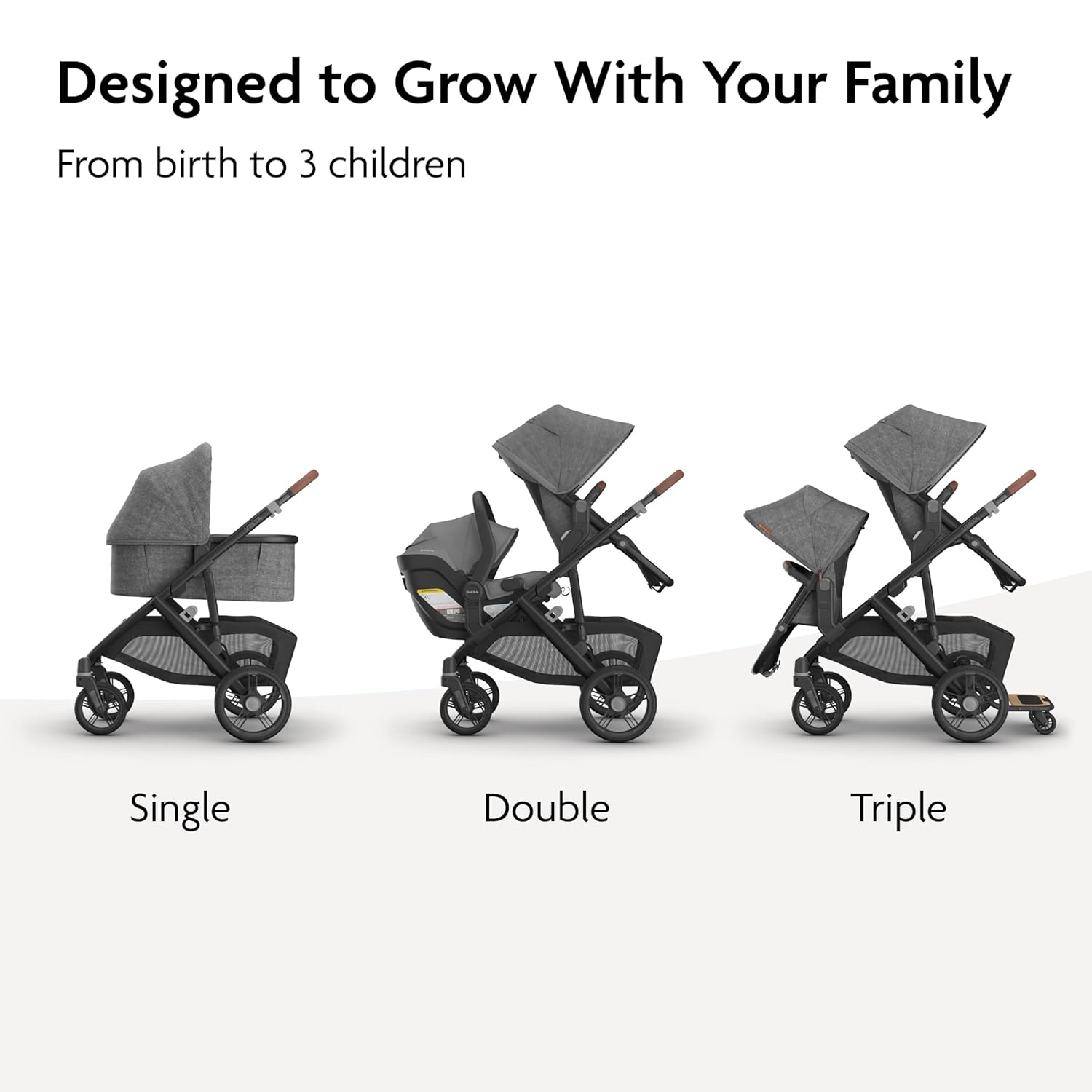
If you’re new to the stroller world, here’s the fastest orientation you need: a stroller frame (the wheeled chassis you push) is almost never a standalone purchase anymore. Most parents want to click their infant car seat — the removable baby carrier you use from birth — directly onto the stroller frame so a sleeping newborn doesn’t get disturbed. They also want a bassinet (a flat, lie-flat sleeping pod that attaches to the frame in the early months) for longer outings. And they want all of it to work together without buying three different brands that don’t speak to each other. That compatibility puzzle is what this article solves. The UPPAbaby Vista V3 — the 2024-onward update to one of the best-selling premium strollers in the US, retailing around $1,100 — has a rich ecosystem of compatible gear. But “compatible” is a word that gets abused online. We’ve gone through UPPAbaby’s official documentation, aggregated owner reporting, and reviews from BabyGearLab and Wirecutter to give you a verified, decision-ready map of what actually fits.
What Changed from Vista V2 to V3 (And Why It Matters for Compatibility)
Before we get into the fitment lists, you need to understand one thing: the V3 introduced a revised adapter mounting interface — the physical bracket system on the frame that allows accessories and car seats to click in. It is not fully backward-compatible with every V2 adapter in the wild.
UPPAbaby confirmed this in their official Vista V3 Accessory & Car Seat Compatibility guide: some V2-generation adapters require an update kit or are simply incompatible with the V3 chassis. If you’re buying second-hand adapters, or receiving hand-me-downs from a sibling who had a V2, verify the part number before assuming they’ll work.
The practical implications:
- Native V3 adapters (sold as “Vista V3” or “2024+” on UPPAbaby’s site) click in and out cleanly and carry the full warranty.
- V2-era third-party adapters from brands like Maxi-Cosi or Nuna — the aftermarket variety sold on Amazon — have mixed owner-reported results on the V3. Some fit; some don’t seat correctly. Don’t risk it on a moving infant.
- UPPAbaby’s own Mesa car seat line retains native, no-adapter compatibility across the V2-to-V3 transition. That’s by design — it’s one of the strongest arguments for staying in-ecosystem.
Wirecutter’s stroller coverage notes that the Vista line’s “invest once, expand later” pitch is most compelling when you stay within the UPPAbaby ecosystem; mixing brands requires more homework.
The Bassinets: What Fits and What to Know
The bassinet is often the first add-on parents consider, because newborns under about four to five months shouldn’t spend extended time in a semi-reclined car seat — they need a flat surface. Think of the bassinet as the “newborn mode” for your stroller.
UPPAbaby Bassinet (Native)
The obvious first choice. The UPPAbaby Bassinet ($230 sold separately, or bundled in some retailer configurations) is designed specifically for the Vista V3 and attaches via the same click-lock system as the seat. It fits both forward and parent-facing orientations, has a zip-in mattress with a breathable cover, and the hood is rated UPF 50+.
Owners on The Bump consistently call out the bassinet’s ease of attachment as one of the Vista’s strongest qualities — you can move it between the stroller and its standalone bassinet stand (sold separately, around $50) without waking the baby, which is the whole point.
One thing to verify at purchase: The bassinet is not automatically approved for overnight unsupervised sleep by UPPAbaby. Like most stroller bassinets, it’s rated for “napping” use — meaning supervised rest. This is an industry-wide standard, not a Vista-specific limitation.
Third-Party Bassinet Options
There isn’t a meaningful third-party bassinet market for the Vista V3 in the way there is for, say, the Bugaboo Fox. The attachment system is proprietary enough that off-brand bassinets don’t have a reliable fitment history. The recommendation here is straightforward: buy the UPPAbaby Bassinet, stay native.
Car Seat Compatibility: The Full Fitment Map
This is where parents spend the most time — and make the most expensive mistakes. The question isn’t just “does it click in?” It’s “does it click in securely, at the right recline angle, without blocking the seat below in a double configuration?”
Native (No Adapter Required)
UPPAbaby Mesa V2 and Mesa Max click directly onto the Vista V3 frame. No adapter purchase. No fitment guessing. This is the cleanest path, and it’s why BabyGearLab’s stroller reviews consistently flag the Mesa/Vista pairing as a top pick for parents who want to minimize compatibility friction.
The Mesa Max specifically is rated for higher-weight children (up to 32 lbs), which gives you a longer runway before transitioning to a convertible car seat.
Compatible with UPPAbaby’s Own V3 Adapter (Sold Separately, ~$40–$60)
Per UPPAbaby’s official compatibility guide, the following infant car seat brands work with the dedicated V3 adapter:
- Nuna PIPA series (PIPA, PIPA rx, PIPA Aire, PIPA urbn) — requires the Nuna PIPA adapter for Vista V3
- Maxi-Cosi Mico series (Mico 12 LX, Mico Luxe) — requires the Maxi-Cosi adapter for Vista V3
- Cybex Cloud and Aton series — requires the Cybex adapter for Vista V3
- Chicco KeyFit 35 and KeyFit 35 ClearTex — requires the Chicco KeyFit adapter for Vista V3
- Graco SnugRide SnugLock 35 — requires the Graco adapter for Vista V3
Critical note on adapters and double configuration: If you’re running the Vista V3 in twin or sibling mode — with a second seat or bassinet on the lower bunk — some car seat/adapter combinations reduce the leg clearance for the lower seat. Owners in long-run reviews note that the Nuna PIPA rx sits slightly higher than the Mesa on the upper bunk, which generally helps lower-seat clearance, but verify your specific configuration before locking in.
By the Numbers
| Car Seat | Adapter Required | Approx. Adapter Cost | Double-Config Clearance |
|---|---|---|---|
| UPPAbaby Mesa V2 / Mesa Max | None (native) | $0 | Excellent |
| Nuna PIPA / PIPA rx | Nuna PIPA adapter | ~$45 | Good |
| Maxi-Cosi Mico 12 LX | Maxi-Cosi adapter | ~$45 | Moderate |
| Cybex Aton / Cloud | Cybex adapter | ~$50 | Moderate |
| Chicco KeyFit 35 | Chicco adapter | ~$40 | Good |
Prices sourced from authorized retailers as of May 2026. Double-config clearance ratings reflect aggregated owner reporting, not manufacturer claims.
The Broader Ecosystem: Footmuffs, Rain Covers, and Accessories
Once the core frame + bassinet + car seat equation is solved, parents quickly discover the accessory rabbit hole. The Vista V3 has a mature accessories ecosystem — here’s how to navigate it without overspending.
Footmuff (Cozy)
UPPAbaby’s own CozyGanoosh footmuff ($120 or so) is the native pick. It attaches to the Vista seat’s harness points and zipper hem, and owners report it fits well without interfering with the shoulder straps. What to Expect’s stroller coverage notes that footmuffs sold as “universal” frequently bunch at the harness openings on the Vista, which is a genuine annoyance — native or certified-fit accessories avoid this.
Third-party options: Saco de dormir (sleep sack) style footmuffs from Bugaboo and Stokke are sometimes marketed as “universal,” but their attachment systems are designed for their own frames. For the Vista V3, stick to UPPAbaby’s own or check the compatibility list on the UPPAbaby site explicitly.
Rain Cover
The UPPAbaby Rain Shield ($50) is cut specifically for the Vista’s canopy geometry. This matters more than it sounds — a rain cover that gaps at the front because it’s 2 cm too shallow is useless in a sideways drizzle. Owners consistently praise the fit; the main complaint is that it’s one of the more expensive rain covers in the category, which is fair.
Cup Holders and Snack Trays
The UPPAbaby parent console (~$35) attaches to the Vista V3’s handlebar via a proprietary clamp. Third-party cup holders with universal clamps generally fit the Vista’s handlebar diameter (~22mm), but owners note that some shift under load. If handlebar cleanliness and a secure grip matter to you — and for a $1,100 frame, they should — the native console is worth it.
Piggyback Board (Ride-Along Board)
For families with a toddler who’s outgrown the stroller but can’t walk all day, the UPPAbaby PiggyBack board (~$80) attaches to the Vista V3’s rear axle plate. This is a V3-specific fitment — the attachment point was revised from V2 — so don’t try to use a V2-era PiggyBack board on a V3 frame. Owners using it for school runs report it holds confidently up to the rated 50 lbs, and it folds up when not in use so it’s not dragging on the ground at the park.
The Decision Frame: How to Build Your Vista V3 Kit Without Overspending
If you’ve read this far, you’re probably building a mental shopping list and trying to figure out where the smart money goes. Here’s the clear if/then logic:
If you’re buying the Vista V3 as a newborn-from-day-one setup: Prioritize the bassinet and a compatible infant car seat before worrying about accessories. The bassinet + native car seat (Mesa) path is the most friction-free and the one BabyGearLab’s reviews consistently recommend for parents who don’t want to troubleshoot fitment in a hospital parking garage.
If you already own a Nuna PIPA or Chicco KeyFit from a previous child or hand-me-down: Buy the correct V3 adapter for that specific seat rather than replacing the seat. The ~$45 adapter is a much better value than a $300+ new car seat.
If you’re planning a second child or currently pregnant with twins: Budget for the RumbleSeat V3 ($280) — the second seat that turns the Vista into a double — before you buy the PiggyBack board. The RumbleSeat has a fitment priority over the board, and you can’t run both simultaneously.
If you’re a gift-buyer: The bassinet + CozyGanoosh bundle (approximately $350 together) is the highest-impact ecosystem gift for a Vista V3 owner. It’s the one configuration piece parents most frequently delay buying for themselves, and it has the most visible daily impact in the first six months.
The Vista V3’s ecosystem is deep enough to justify the chassis price — but only if you build it correctly from the start. Cross-reference every adapter purchase against UPPAbaby’s current compatibility guide (the document is updated when new car seat models release), buy from authorized retailers to protect the warranty, and resist the gray-market adapter listings that appear 20% cheaper on secondary platforms. On a product your infant rides in daily, that’s not a trade worth making.
Compatibility data in this article reflects UPPAbaby’s official Vista V3 Accessory & Car Seat Compatibility guide and aggregated owner reporting as of May 2026. Car seat models are updated by manufacturers regularly — always verify current fitment directly with UPPAbaby before purchasing adapters for newly-released infant car seat models.